Healthcare
Preparing Immunization Records for Clinical Placements
Find records across Ontario sources, resolve missing information, obtain clinical review, and prepare clear evidence for CareCard verification.
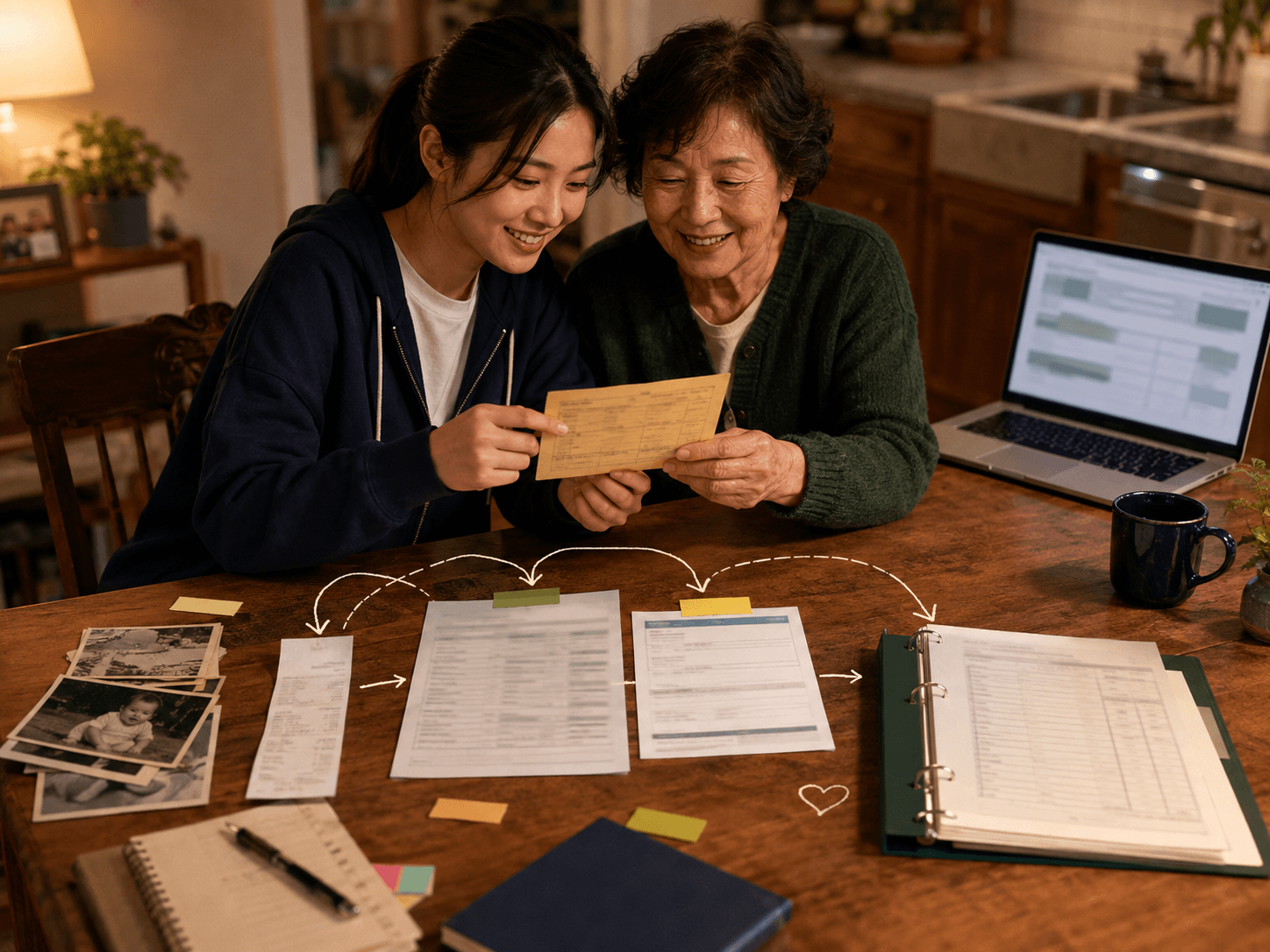
Start with the current requirement list
Obtain the immunization and health requirements issued by your program and placement site before collecting documents. Healthcare placements may require vaccine dates, laboratory evidence of immunity, tuberculosis screening, seasonal vaccination, and a form completed by a healthcare professional. These are separate forms of evidence and should not be treated as one interchangeable record.
Requirements can differ between institutions and roles. Healthcare employment, home care, child care, and private caregiving may follow employer, occupational-health, or local public-health policies. A school immunization record is useful source evidence, but it does not by itself confirm that every clinical or employment requirement has been met.
Do not expect one complete Ontario record
Ontario does not currently have one comprehensive repository containing every vaccine received throughout a person’s life. Public-health systems primarily support school, child-care, outbreak, and public-health programs, while other doses may remain in a clinician’s, pharmacy’s, workplace’s, or clinic’s records. Records from another province or country do not automatically appear in Ontario systems.
Immunization Connect Ontario, commonly called ICON, can provide records reported to a local public-health unit, including information used for school attendance. Its contents depend on what was reported and processed. Use an ICON record as one source, then compare it with your personal record and documents from every location where you received vaccines.
Search each likely record source
Begin with your paper yellow card, electronic yellow card, provincial or territorial record, and any records kept by a parent or guardian. Contact the local public-health unit where you attended school or received public-health vaccines. If you lived in more than one region, province, or territory, contact each relevant authority because records may not have transferred.
Request records from current and former family doctors, pediatricians, community clinics, pharmacies, school clinics, travel clinics, hospitals, and occupational-health departments. Obtain laboratory reports directly from the laboratory portal or ordering clinician when serology is required. The Public Health Agency of Canada advises contacting a primary healthcare provider or the applicable public-health unit to access vaccination history.
Request official and focused copies
Ask the record holder for an immunization summary or the specific vaccine entries you need rather than an unrelated copy of your entire medical chart. Written or electronic documentation from the provider is preferred. The record should identify the vaccine and administration date and should show enough provider or registry information for the source to be recognized. National guidance also recommends recording the product brand, dose, route, site, lot number, expiry date, and vaccinator information.
Ontario physicians must provide patients with access to or copies of records in their custody unless a legal exception applies, and reasonable copying fees may be charged. If a clinic has closed, review its notice for the successor or records custodian. The College of Physicians and Surgeons of Ontario can provide guidance when the custodian is unclear or access is delayed. Processing times vary, so submit requests well before the placement deadline.
Check whether each document can be verified
Match each document to the evidence requested for that requirement. A vaccine record establishes the product and dose dates, while a laboratory report establishes a specified antibody marker and result. Tuberculosis skin-test evidence requires both administration and reading information. Review each item separately because one type of evidence does not automatically replace another.
Do not alter an original record to correct a name, date, or vaccine description. If an older document uses a previous legal name, ask the program what supporting name-change evidence it accepts. If a date is unclear, a product name cannot be identified, or two records conflict, ask the issuing provider or an assessing clinician for clarification. Records from outside Canada should be retained in the original language and accompanied by a professional translation when the program or reviewer requires one.
Have a healthcare professional assess missing evidence
A personal recollection or family account without supporting documentation is generally not accepted as an immunization record. Canadian guidance recommends first trying to obtain written or electronic evidence from previous providers. Routine blood testing is not a practical replacement for all missing records because serology is useful or accepted only for specific diseases and circumstances.
When adequate documentation cannot be obtained, a healthcare professional should determine whether existing doses can be counted, whether disease-specific serology is appropriate, or whether an age- and risk-based catch-up schedule is required. Canadian guidance generally treats a person with inadequate documentation as unimmunized. A delayed series does not usually need to be restarted when valid doses are documented, but the clinician must apply the correct vaccine-specific schedule.
Complete the institutional form after records are reviewed
If your program provides an immunization or health-clearance form, bring the form, source records, laboratory reports, and requirement list to the appointment. The clinician can reconcile vaccine names, dates, valid intervals, serology, contraindications, and outstanding actions. A signature on a summary form does not replace an underlying laboratory report or vaccine record when the institution asks for both.
Do not ask a clinician to certify a dose that cannot be supported by the available record. If additional vaccination, blood testing, or tuberculosis screening is required, complete it within the timing specified for that requirement and obtain documentation at the appointment. Review the finished form before leaving so missing signatures, dates, and results can be corrected by the provider.
Prepare the CareCard files for review
CareCard accepts PDF, JPG, JPEG, PNG, HEIC, HEIF, TIF, TIFF, GIF, and WEBP files up to 50 MB per file. Attach the complete, clearly readable evidence requested by each requirement; one requirement may include several files, such as a vaccination record and a separate laboratory report. Keep related pages in the correct order, keep all edges visible, and confirm that required identifiers and dates can be read. Do not upload a password-protected or altered source document.
When one official record supports several requirements, use Attach Existing to connect the stored file to each matching CareCard requirement instead of uploading duplicate copies. Keep unrelated records separate and include each distinct laboratory report or other supporting document where the assigned requirement requests it.
Maintain a permanent immunization record
Store a secure master copy of your vaccine history and supporting laboratory reports. Ask the provider to update the record whenever a vaccine, titre, tuberculosis test, or medically documented exemption is completed. Retain both the source document and the final institutional form rather than replacing one with the other.
Review each new entry with the provider and have any omission corrected at the source. Maintaining the record as care is received reduces future retrieval work and helps a clinician make accurate decisions about additional doses or testing.
Official immunization record resources
Use the current program, placement site, occupational-health, and local public-health instructions together with these official references.
- CareCard preparation and upload guide
- CareCard immunizations and serology requirements
- Public Health Agency of Canada vaccine-record access guide
- Canadian Immunization Guide: immunization records
- Canadian Immunization Guide: inadequate records
- Canadian Immunization Guide: timing of vaccine administration
- Canadian Immunization Guide: immunization of workers
- Ontario report on immunization information systems
- Ontario school records and ICON guidance
- Ontario public-health unit locations
- CPSO medical-record access and retention policy